Natural fibers are having a moment. Fibers such as Industrial hemp, flax, jute, and kenaf are moving from niche to mainstream as manufacturers look for renewable, low carbon, biodegradable alternatives to glass fiber and petroleum-based materials. The demand is growing across biocomposites, agriculture, and building insulation. The catch is that natural fibers are difficult to process: they are mixed denier, length, and dusty. Most nonwoven web forming and fiber opening and blending equipment was never built for them. Rando technology excels with natural fibers, from fiber preparation to web forming.
Why natural fibers defeat ordinary equipment
Bast fibers like hemp, flax, jute, and kenaf are nothing like the clean, uniform synthetic staple most machines are tuned for. They often arrive bale with variable inconsistent lengths, with coarse and fine fractions mixed together, plus dust and shive. They change from batch to batch, and even within a single bale. This inconsistency can be the virtue of a natural material subject to weather, growing conditions, soil quality, etc. The standard fiber machinery Equipment on the market designed for fiber with regularity like polyester chokes on that variability. Rando’s entire history is running the fibers other machines struggle with, which makes natural fiber a production fit with Rando Machinery.
From baled fiber to a uniform web
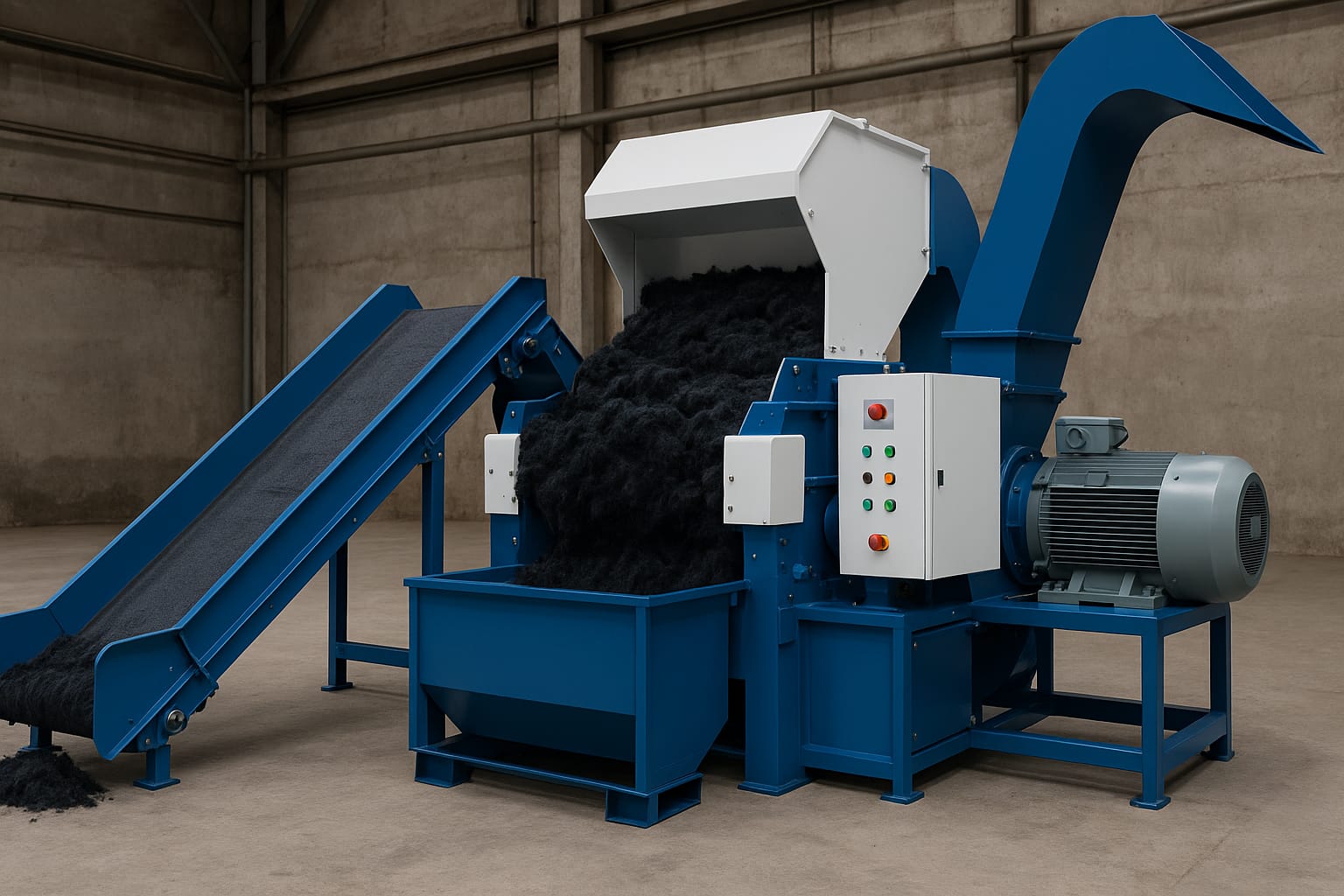
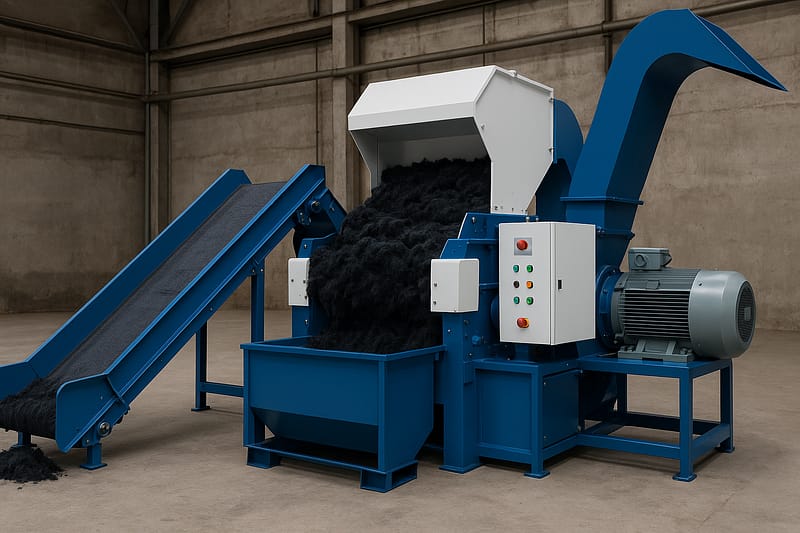
Processing natural fiber well starts before the Rando web former, or before any airlay for that matter. Rando’s openers, blenders, and bale breakers take compressed, tangled bales and open them into a consistent, free-flowing fiber stream, mixing coarse and fine fractions and metering the material evenly. Depending on your goals, Rando can size fiber opening equipment to be as aggressive as needed for fiber preparation. That preparation is the difference between a lumpy, inconsistent web and a web with high uniformity.
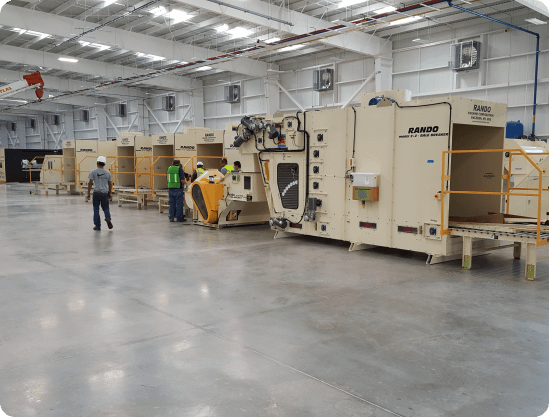
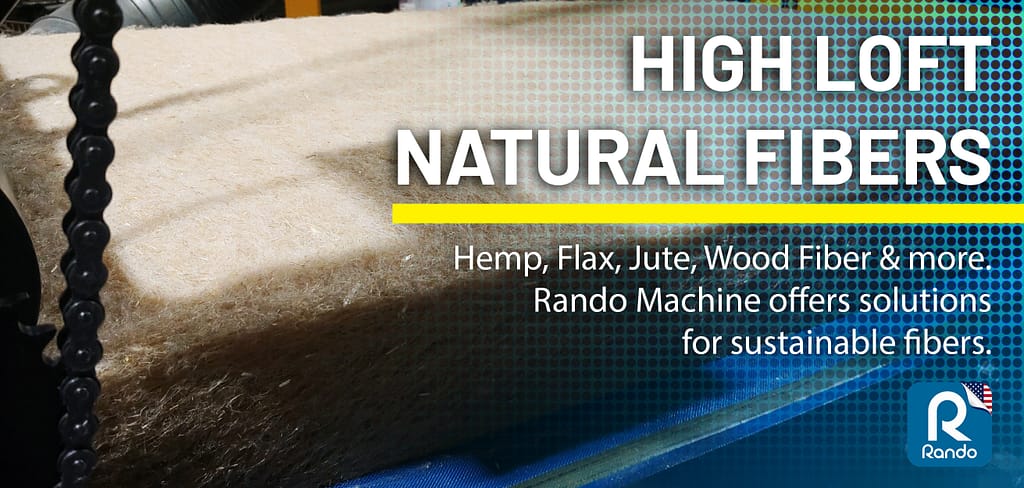
From there, the Rando Webber lays the fiber in true random orientation, producing a uniform web with even weight and loft across the working width. Again here, Rando can size working widths to your specific needs. For instance, natural fiber construction materials may require 4ft or 8ft increments, where geotextile materials may require 10ft to 12ft increments. Natural fibers are often blended with a binder or bicomponent fiber for thermal bonding, so the Webber’s ability to combine dissimilar fibers into one consistent web matters. And the high-loft condenser forms webs from thin mats up to ten inches tall, which opens the full range of natural fiber products, from dense composite mats to lofted insulation batts.
Three markets, one platform
Biocomposites: Natural fiber mats are replacing glass fiber in automotive interior panels and construction composites, offering lower weight, renewable content, and strong mechanical performance. A uniform, isotropic web gives the consistent fiber distribution a good composite depends on.
Agricultural growing media: Natural fiber substrates are emerging as a renewable, biodegradable alternative to rockwool and peat for hydroponics, propagation, and controlled-environment agriculture. Here loft and uniformity govern water retention and root aeration, which are exactly the web properties the Webber is built to control.
Insulation: Natural fiber batt insulation is one of the fastest-growing sustainable building materials, valued for renewable content, carbon storage, and healthier indoor air. Lofted, thermally bonded natural fiber webs are the core of the product, and high-loft air-laid forming is how they are made.
These three examples are just the tip of the iceberg. Innovation in natural fibers and natural fiber nonwovens are creating new and exciting markets for natural fiber materials. Rando can support you in developing your product concept on our trial line.
Renewable by nature, proven on the line
Natural fiber processing sits comfortably with Rando’s oldest instinct. The company was founded reclaiming waste cotton, and renewable and recycled fiber has been in its DNA ever since. Natural fibers extend that story: crops that store carbon as they grow, processed into products that can biodegrade at the end of their life.
Because natural fiber varies so much, proving a process before committing to a line matters more here than almost anywhere. Rando’s pilot line lets a manufacturer run their actual material, whether it is hemp from one region or jute from another, and see the web before buying the machine that makes it.
The natural fiber market is growing because the world wants renewable materials. Rando has spent 75 years building the machines that turn difficult, variable fiber into a uniform, useful web. From hemp to jute, that is exactly the kind of problem worth solving.
Try your natural fibers
See how Rando’s lineup handles natural fiber, or bring your hemp, flax, or jute to the pilot line and watch it form.