
Every plant that makes bonded fiberglass or mineral fiber board produces waste it would rather not. There are many sources of bonded panel waste: Edge trim from squaring up panels, off-specification boards that missed a density or thickness target, startup and changeover scrap. For most manufacturers, that material is costly waste. When this material is easier landfilled than recycled, the fiber they already paid for and the cost of hauling it away is a quiet, expensive leak in an otherwise efficient operation.
Why bonded board is so hard to recycle
The waste piles up because the bonded board resists recycling with conventional recycling options. Once loose fiber has been bonded with resin or bonding fibers and pressed into a dense, rigid panel, it no longer resembles the original fiber feedstock at the start of the process. It is a tough, sometimes sticky, consolidated material. Breaking it back down into clean, usable fiber is a real mechanical challenge, and most equipment either cannot do it or destroys the fiber trying. To efficiently recycle these materials, often numerous steps are required, and most recycling machinery manufacturers lack the multi-step process to bring these fibers back to a usable state.
High-density fiberglass and mineral fiber insulations are among the most difficult of all to reclaim.
Refiberizing: turning the panel back into fiber
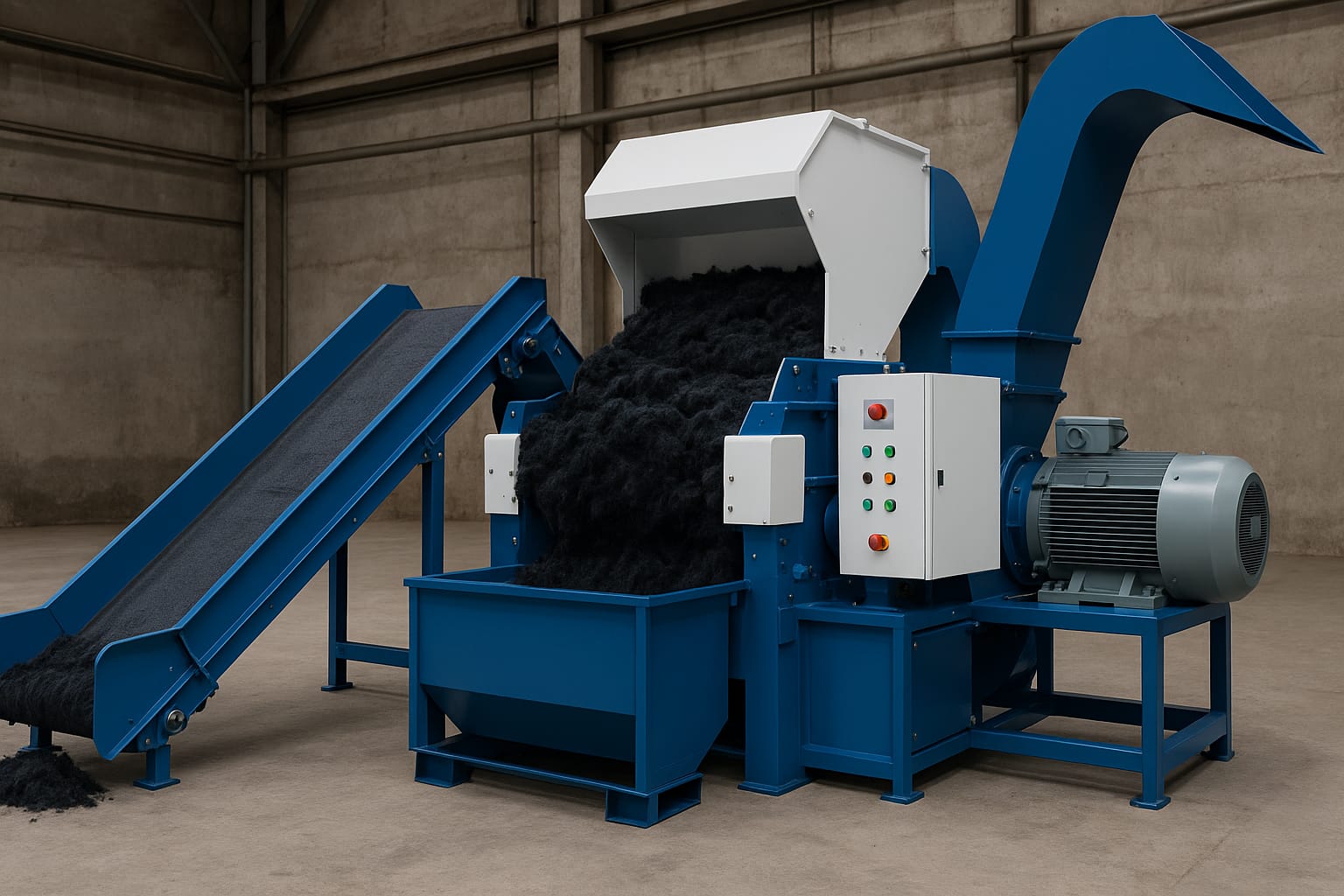
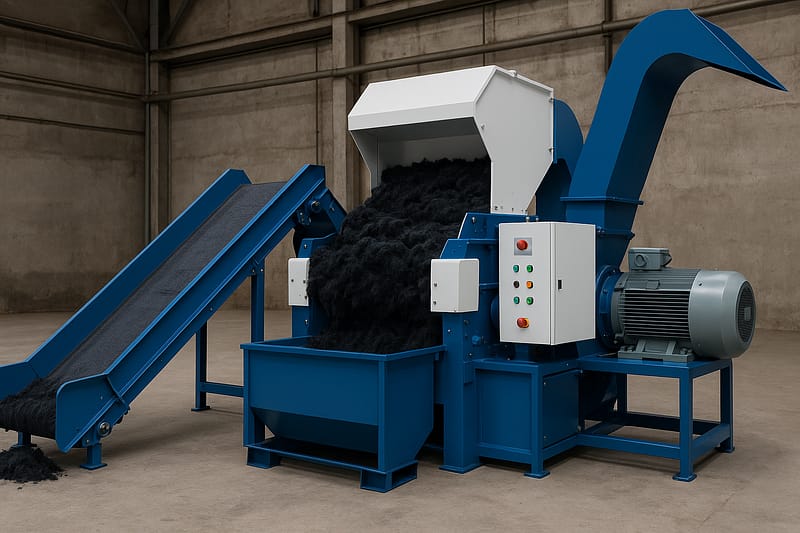
This is the job the Rando Shredder was built for. It takes bonded trim and off-spec material and breaks it back down into small, uniform tufts of fiber that can be fed back into the line and blended into new product. A bear-claw shredding roll and wire-wound feedrolls do the work, with anti-choking and anti-overfeed control so dense, difficult material moves through at a high rate without jamming. The result is not shredded scrap. It is reclaimed feedstock, uniform enough to reintroduce to production.
Downstream capabilities can be added on, depending on the fiber and finished product feedstock. The Rando Refiberizer can follow the Rando Shredder, furthering the process of fiber being brought back to a usable state. Pneumatic air separation can remove dust and debris from the air stream, further cleaning the fiber. There are many configurations that can be explored to repurpose your bonded panel waste, and every assembly of technologies is as unique as the feedstock.
Waste into profit, and a step toward zero waste
The economics are straightforward. Every pound of panel reclaimed is a pound of fiber you do not have to buy again, and a pound you do not have to pay to landfill. A waste stream becomes a feedstock stream. For manufacturers chasing zero-waste goals, it closes one of the hardest loops on the floor, the dense bonded scrap that usually has nowhere to go. The reclaim system earns its keep twice, once on raw material and once on disposal.
Built around your material, not the other way around
No two recycling problems are identical. Fiberglass behaves differently from mineral fiber. A high-density board recycles differently from a light one. One plant wants reclaimed fiber fed straight back into a single line, another needs it metered across several. That is why Rando engineers the system to the feedstock rather than forcing the feedstock to the machine. The shredder comes in 36 and 60 inch widths and in custom sizes, and it pairs with the rest of Rando’s machinery range, like volumetric reserves, weigh conveyors, and openers, and more, so reclaimed fiber can be stored, metered, and reintroduced exactly the way a given product needs.
Bonded fiberglass and mineral fiber waste has long been one of the hardest things in the plant to deal with, which is exactly why it is worth solving. Rando has spent its history turning difficult fiber into useful nonwoven materials. Reclaiming bonded panels follows Rando’s legacy of solving difficult challenges with engineering and reliable manufacturing equipment. With Rando, turn waste into profit and explore our bonded panel recovery solutions.
Let’s discuss bonded panel recycling
We’d love to hear about your bonded panel recycling challenges.